
Beyond the Bot: Crafting an Effective AI-Human Grievance Channel That Works
The fundamental purpose of an effective supply chain grievance mechanism is to ensure that victims of human rights violations gain timely access to proper, safe, and effective remedy.
WHAT YOU WILL TAKE AWAY
A toolkit that works
- Your Own Beta AI-Human Grievance Channel SOPTailored to your organisation's operational environment
- A Ready-to-Use Process In an A3 CanvasExplainable to your internal teams
- Ethics & Accountability Decision ChecklistDo’s and Don’ts
Stakeholder value
Given Value to Key Stakeholders
Brand Local Offices
An operational challenge“How can we resolve worker issues locally on the ground in a timely manner, while maintaining real-time automated risk alerts to Global HQ?”
What we offerA practical framework to resolve local factory issues within a 48‑hour window while maintaining compliance transparency
Brands Headquarters
An operational challenge"How can we centralise global compliance data to ensure systemic remedy without violating regional data protection laws or exposing worker identities?"
What we offerData governance protocols and AI-supported decision making model
CSOs & Trade Unions
An operational challenge"How can local CSOs engage with brand local offices without suffering multi-dashboard fatigue, providing expert remedy while protecting workers?"
What we offerCo-designed integration standards and SOP for AI-supported hour
Tech & Solution Providers
An operational challenge"How can tech/advisory agencies pitch and deliver hybrid grievance solutions that integrate low-tech fallback channels and deliver verifiable remedies?"
What we offerReal‑world case study of human-centred design mindset
Executive Overview
AI chatbots will fail when they are deployed in high‑risk supply chains without human-centred oversight, leaving vulnerable workers exposed to retaliation and dismissal. Conversely, manual grievance channels always struggle to scale up amid evolving due diligence requirements, including CSDDD.
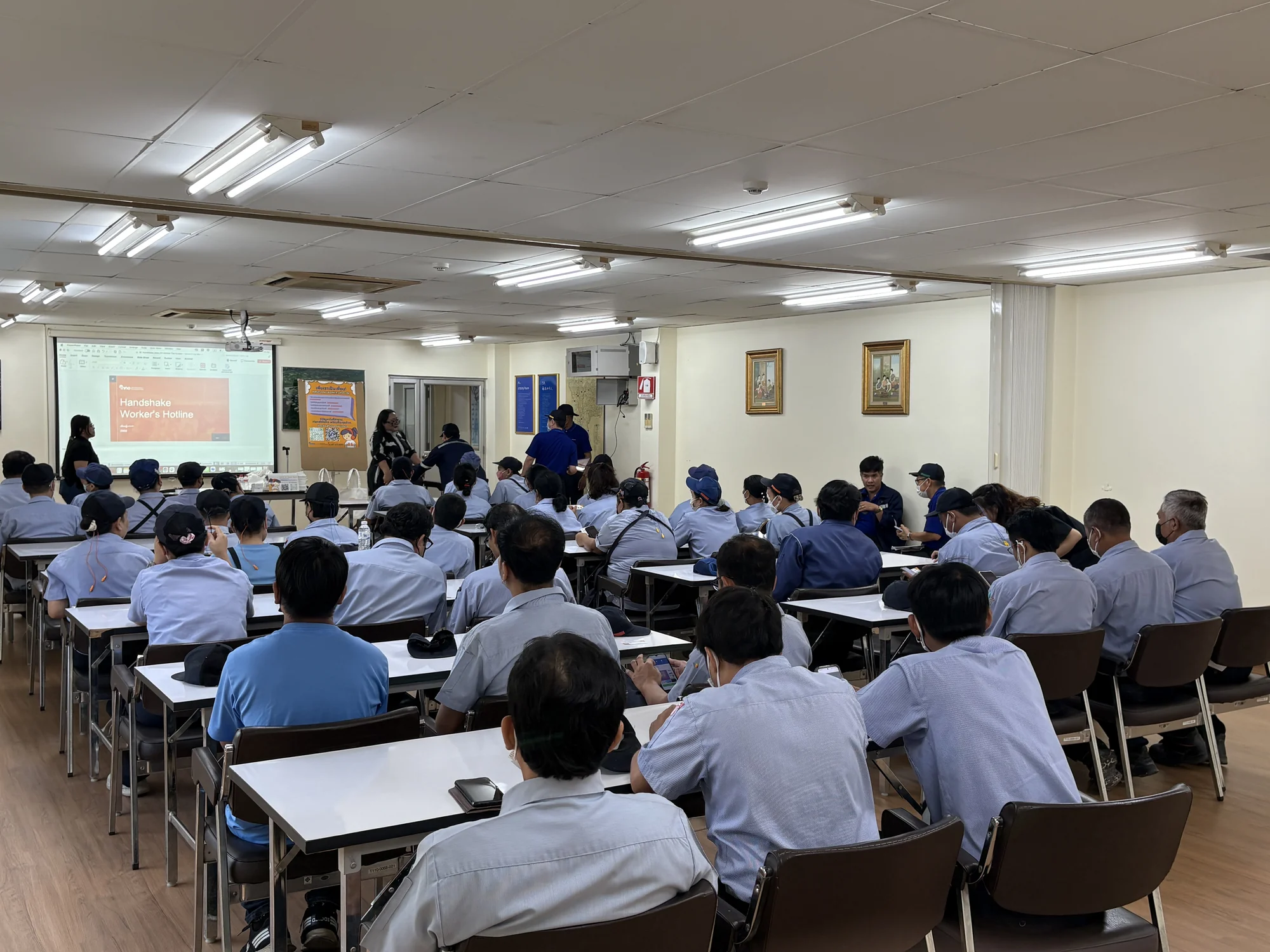
Grounded in 19 years of direct operational experience from Handshake Worker's Hotline, this intensive 90‑minute Workshop moves beyond theoretical ESG targets to address real‑world labour violations.
Participants will work together to analyse intake scenarios, map hybrid AI‑to‑human workflows and build enforceable remedy processes across multi‑stakeholder settings.
20 minutes
SEGMENT 1 / GAP ANALYSIS
Framing & the “Spot‑the‑Bot” Gap Analysis
A typical example of AI-bot grievance response against worker's willingness
THE CORE MISSION
The fundamental purpose of an effective supply chain grievance mechanism is to ensure that victims of human rights violations gain timely access to proper, safe, and effective remedy.
90‑minute interactive Workshop
WORKSHOP STRUCTURE
From gap analysis to a concrete action roadmap.
Four connected working segments move from failure analysis to a tested AI-Human workflow and an organisational next step.
Design constraints
The 3 Non‑Negotiable Golden Principles
- 01
Technology serves the human advocates, never replaces them.
- 02
Anonymity is an absolute technical constraint, not an administrative policy.
- 03
Intake without guaranteed remedy is a fatal risk for brands, not a budget saving attempt.
RSVP
Workshop Sept 17, 2026 · 09:00–10:30 Bangkok time
Deadline
Capacity 30 places · Confirmation by email
UN FORUM REGISTRATION REQUIRED
You must register for the UN Responsible Business and Human Rights Forum 2026 before requesting a place in this Workshop.
Register on the official UN event page